Search This Blog

Thursday, December 18, 2014

In Hot Water - Yellowstone Basin - Visiting Yellowstone National Park

Look and listen to the hot water coming up through the geothermal vents in Yellowstone National Park.


HD

Yellowstone is constantly changing and singing different songs. 
Take a minute to warm up with some hot water from underground.
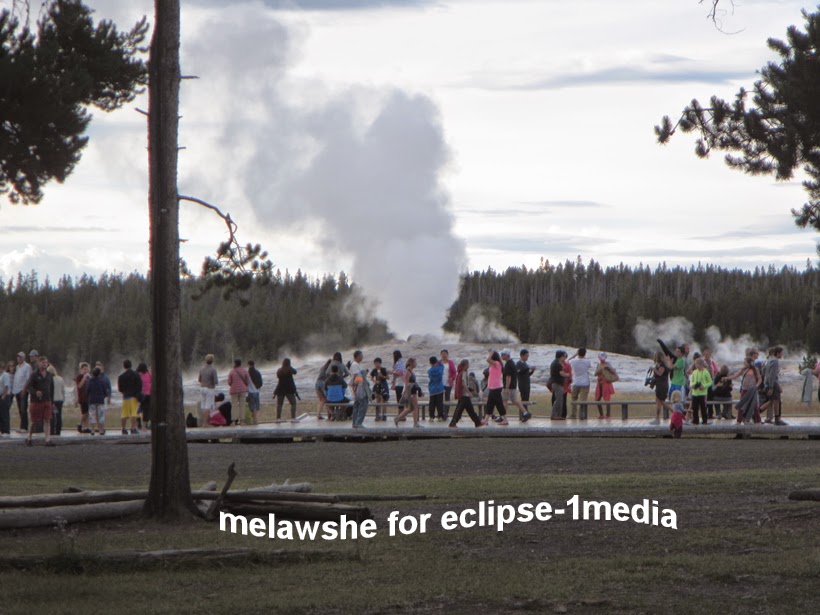
Old Faithful Geyser
 See more of Yellowstone at TheEarthMinute.com

Thursday, December 11, 2014

Meet a Channel Island Fox

The endangered Channel Island fox (Urocyon littoralis) is only found on six of California's Channel Islands and no where else in the world. To survive on islands with limited resources, the island fox is an opportunistic omnivore–he eats a wide variety of insects, small animals, and native fruit.

Watch this San Clemente Island fox (Urocyon littoralis clementae) hunting for beetles and beetle larva.

HD

Recent research on island fox diet reveals differences in primary foods between the six subspecies of island fox (more on island fox diet). Each island habitat offers different food resources and the various island fox subspecies have adapted to survive on what their island home has to offer. All island foxes, however, rely on insects.

Their keen sense of smell and hearing helps them locate even the tiniest prey, while their small teeth function like precision tweezers to pick up grubs and beetles.

Santa Cruz Island, Channel Islands National Park

See where island foxes live on Santa Cruz Island and San Nicolas Island. Find out more about Channel Island foxes and conservation efforts at islandfox.org.

More Earth Minute animal close-ups
 
Visit The Earth Minute each week to discover other wild places and wildlife.

Thursday, December 4, 2014

Take a Wildlife Cruise on the Yellow Water, Kakadu, Australia


There are few places in the world with the primal feel of Kakadu. Take a cruise along the Yellow Water at sunset; Discover the birds and crocodiles that call it home.

HD
forest kingfisher (Todiramphus macleayil)

Kakadu National Park in Australia's Northern Territory is an area of humid forest and extensive wetlands. It is a sacred place to the Aboriginal people and a World Heritage Site.

Here thousands of birds shelter in the wetlands and forest, while saltwater crocodiles lounge along the river banks and fiercely protect territory.


female saltwater crocodile
In a two-hour cruise with an Aboriginal guide, we saw thirty-five species of birds, including: five species of heron/egrets and three species of kingfishers.

little kingfisher

 The little kingfisher (Ceyx pusillus) is the smallest kingfisher in the world. This tiny hunter is only the size of a hummingbird, yet it plunges down into the water to grab minnows with the same skill as its larger relatives.

Kakadu is a special wild place, one not to be missed. We planned our whole visit there using their amazing website http://www.parksaustralia.gov.au/kakadu/

More Earth Minutes with Australian birds:
Seabirds on Australia's Great Barrier Reef, Queensland, Australia

More Earth Minutes in Australia

Experience a New Earth Minute each Week

Thursday, November 27, 2014

Meet the Dugong


Share a minute with a rare marine mammal, the dugong (Dugong dugon).

HD

Most Americans are familiar with the endangered Caribbean manatee (Trichechus manatus), a slow moving herbivorous mammal that swims in shallow warm waters from Florida and the Caribbean to coastal South America. The dugong is related to the manatee, but it lives in the Pacific Ocean from Micronesia and the Philippines to Taiwan, South East Asia, and Indonesia to northern Australia and the Pacific islands. Unfortunately, only the Australian population is monitored and there is concern that this gentle plant-eater may be disappearing across much of its territory.

Watch the dugong swimming and you will note that it has a fluked tail like a dolphin, rather than a spoon-shaped manatee tail. The dugong swims faster than the manatee and is known to travel further when migrating. 

However, because it lives across a wider area, little is known about wild dugongs except that they eat sea grass. They are important creatures in their marine ecosystem because their grazing encourages the growth of sea grass higher in nutrients. In captivity, dugongs are picky eaters, refusing more nutrient-rich greens and preferring romaine lettuce. 


Unfortunately, romaine is low in nutrients. It takes a crew of people to keep the dugongs healthy. They refill special feeding trays all day long that hold the lettuce upright underwater like sea grass. 

Like their closest land-relative, the elephant, dugongs can live to around age 70. They also do not reach sexual maturity until after 10 years old and mothers care for their offspring for several years, spacing calves three to seven years apart. They are very slow to reproduce. 

In 2014 there are only five dugongs in captivity in the world. The two pictured here are orphaned individuals that were unable to survive in the wild.  (more about Pig and Wuru at the Sydney Aquarium in Australia).

See more Australian wildlife:
Cape Tribulation, Queensland - Watch Green Tree Ants
See Natural Art on a Tropical Australian Beach (sand dabbler crabs)
Flying Foxes in Cairns, North Queensland, Australia
Sea Birds on Great Barrier Reef, Queensland, Australia  
Spotting a Lace Monitor in the Wild
Australian Great Barrier Reef Swim
(parrot fish, zebra fish, giant clams, coral)


Swim over to The Earth Minute each week for a new one-minute adventure.


Thursday, November 20, 2014

Close-up with a Red Jumping Spider

Not all spiders are the same. Jumping spiders are compact athletes with short, strong legs. Rather than construct webs, they prowl around for their prey. This spider is more like a tiger. 

Get close-up with a red jumping spider (Phidippus formosus). See if you can count its eyes?


HD

Nearly the size of a quarter, this is California's largest jumping spider. More information on this amazing spider at Animalbytes.net

See more wildlife close-ups, including California's Valley carpenter bees and gray bird grasshopper, and green tree ants in Australia's rainforest.

Friday, November 14, 2014

Discover Mountain Wildflowers in Wyoming


In this montane meadow at Togwotee Pass in Wyoming, discover wildflowers and the meadow thistle (Cirsium scaroiosum).

HD

While some people collect photos of architecture or kittens, I love thistles. Native thistles in their natural environment. 


meadow thistle (Cirsium scaroiosum)
Unlike most thistles, the meadow thistle has a single thick stalk with numerous flowers close together encircling the crown. Fine hairs on the leaves reflect the sun making the plant appear to glow on the mountain slopes. 

I have a hunch these plants really dazzle in the ultraviolet part of the light spectrum, creating a beacon to attract native bees and insects. The meadow thistle lives at high elevation and must attract its pollinators during a short alpine summer. 

creamy buckwheat (Eriogonium umbellatum var. subalpinum)

Togwotee Pass is adjacent to Tetons National Park and Yellowstone National Park. (watch bison in Yellowstone)

For more about Rocky Mountain flora visit rockymountainsflora.com


Visit TheEarthMinute.com for a new 
1-minute adventure each week

Thursday, November 6, 2014

California Misses the Rain -Take an Autumn Walk in New York's Central Park

In Southern California we are in the middle of a record drought.

This October we visited New York City's iconic
Central Park and took a walk on a wet and beautiful fall day.


Join us on our rainy day stroll through the park! 

hd


Subscribe and visit us every week to watch more at: